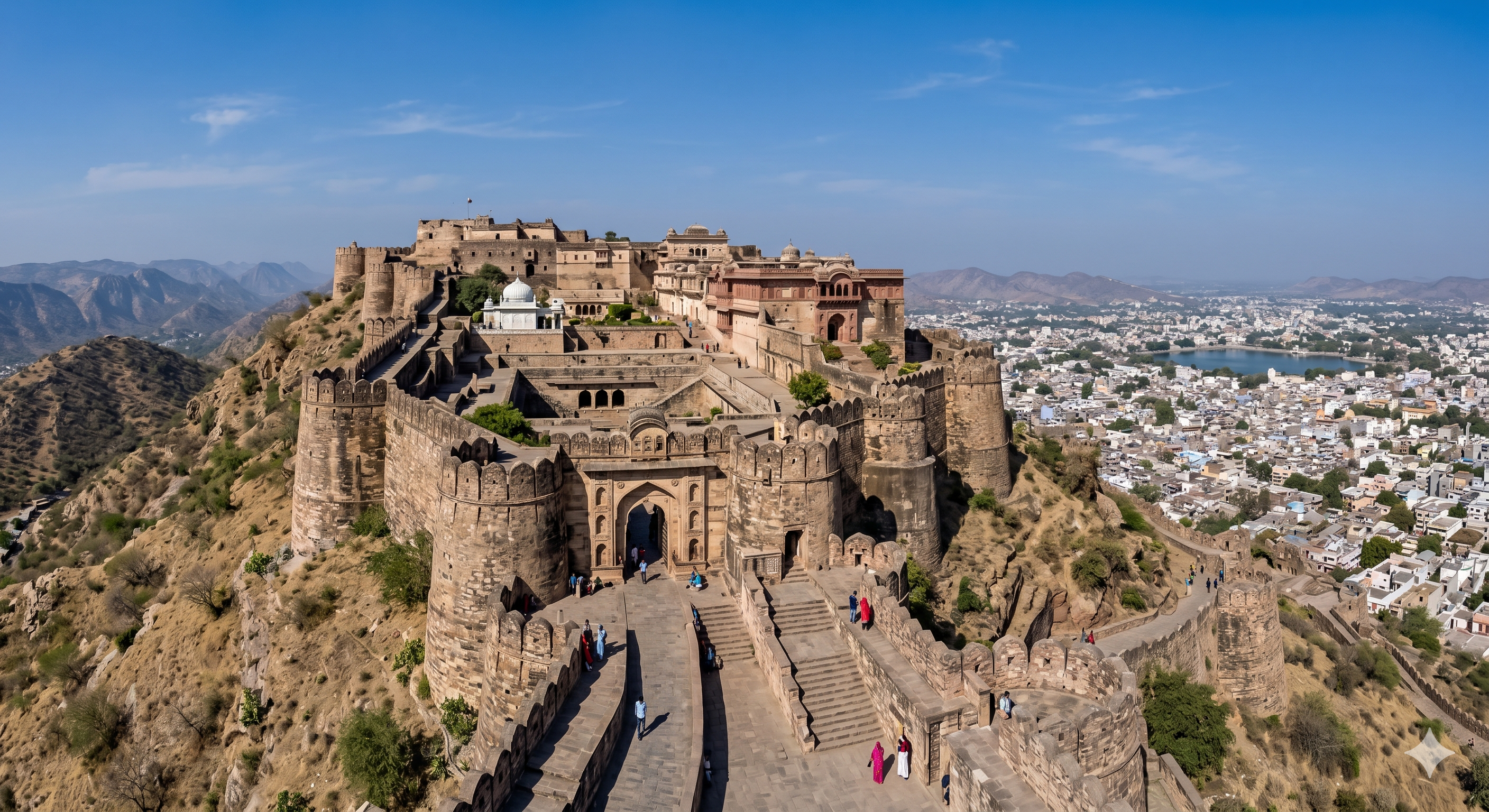
From the ancient fort of Taragarh to the iron road that changed a nation β the story of a city that became the heartbeat of India's railways.
Before the rails came, before the workshops rose, before any locomotive turned its wheels in the dust of Rajputana β there was a city. A city of deliberate position. Of ancient purpose.
The story of The Loco Workshop is inseparable from the story of Ajmer itself: a place chosen not by accident, but by the invisible logic of geography, history, and strategic necessity. This is that story β told across five chapters of iron, steam, and human will.
Ajmer sat β quiet, deliberate β at the heart of undivided India, as though it had chosen its place long before men thought to measure the earth. Hills rose around it, not in arrogance, but in patient watchfulness. Among them stood Taragarh, the old sentinel, built when kings still trusted stone more than treaties.
Empires came to understand this. The Mughals held it close. Akbar made it a province. Jahangir received Sir Thomas Roe here in 1616 β a meeting that was a hinge upon which future histories would turn. The Marathas took it, and in 1818, it passed into British hands.
But Ajmer was never conquered fully. It was used. The British, practical men of ledgers and lines, saw what others had only felt: that Ajmer lay between powers β Jodhpur to the west, Udaipur to the south, Jaipur to the east β and like a keystone, held the arch of Rajputana together.
In the early 19th century, India was not yet a land of rails. It was, to the merchants of Victorian Britain, a place of promise β but also of inconvenience. Among those who saw further than the present was Rowland Macdonald Stephenson, who in 1844 proposed not merely a railway β but a system: six great routes that would bind the subcontinent in iron.
The Anderson Committee of 1864 outlined what would become the skeleton of modern India's railway network: a direct line from Bombay to the North-Western Provinces, connections to Delhi and Agra, a central line through Jaipur to Ajmer, and onward to Neemuch and Indore.

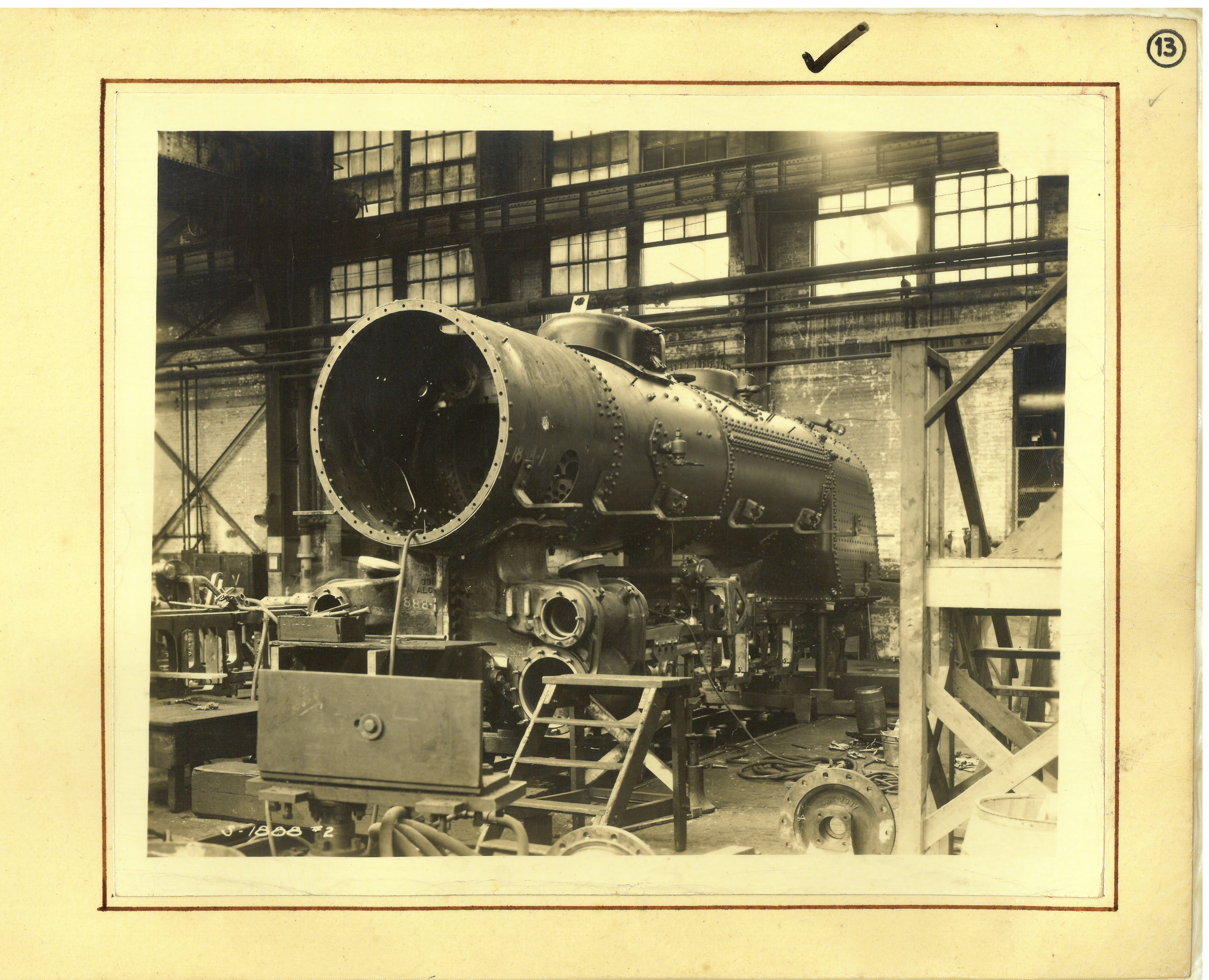
What they had outlined in careful prose would, within twenty years, stand complete β and at its operational heart would be The Workshop at Ajmer, transforming from a maintenance depot into the manufacturing soul of the metre gauge system.
"Maintenance is one thing. Manufacture is another." β The doubters were answered not in argument, but in iron.
There are decisions in engineering that appear, at first glance, to be matters of inches. In truth, they are matters of destiny. By 1869, railways had proven too expensive. Lord Mayo, in a dispatch that bordered on warning, wrote with clarity: "An extravagantly constructed railway is permanently a financial failure⦠To a poor country like India this lesson is of exceptional importance."

A committee of four engineers β Strachey, Dickens, Fowler, and Rendel β was appointed. Their recommendation: a gauge of approximately 3 feet 3 inches, adjusted to align with the proposed metric system. Thus 3 feet 3β inches became one metre. And Rajputana became the first region in India to adopt metre gauge on a large scale.
For the Workshop that would rise in Ajmer in 1877, this decision was decisive. Every locomotive built there β every axle, every cylinder, every measured inch of its frame β would carry the character of this constraint. And from constraint came refinement.
By the turn of the twentieth century, Ajmer Workshop had passed beyond its apprenticeship. It no longer asked whether it could build β it concerned itself with how well. Under the leadership of William Stuart Fraser, who became Locomotive Superintendent in April 1911, a comprehensive replacement programme began. Design became purposeful. Production became regularised.
The Workshop produced locomotives of remarkable variety: the F Class workhorse, the M Class for mail services, the P Class with superheaters, the powerful G2 Class for mixed traffic, and the YB Pacific β City of Ajmer, City of Delhi, City of Bombay β the crown jewels of metre gauge passenger service.
During both World Wars, Ajmer's engines went abroad β to Mesopotamia and Egypt β practical contributions from Rajputana to distant campaigns. By 1949, when the last locomotive left the erecting shop, the Workshop had built 467 engines over five decades. Each one a proof.
In 1949, the Workshop built its last locomotive β an XT1 Class tank engine. No ceremony marked the moment. The machine simply moved out, as countless others had done β into service, into distance, into time. And with that, the era of building closed. But the era of sustaining had already begun.
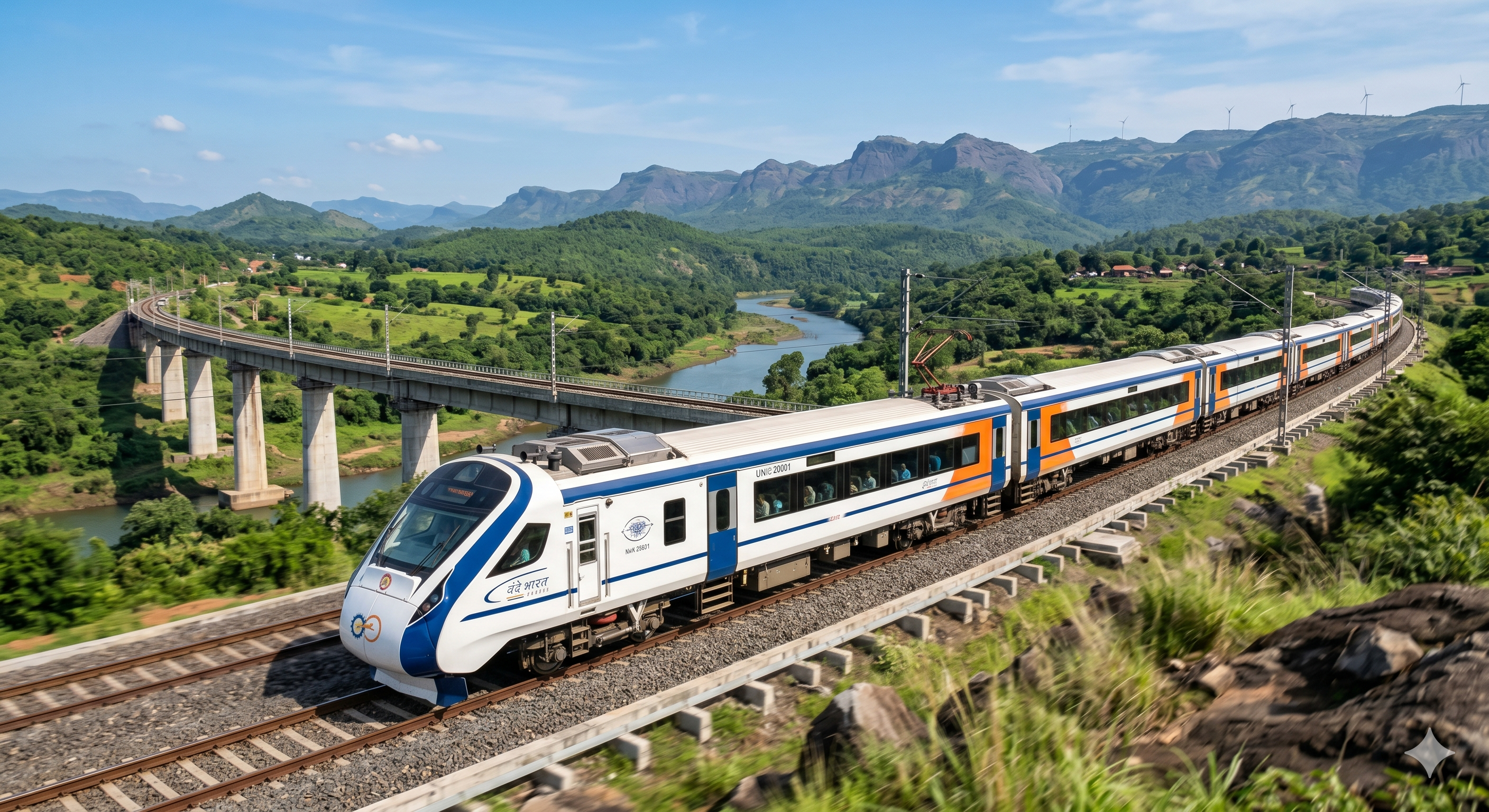
Ajmer adapted β as it had always adapted. The knowledge that had once shaped boilers and frames found new purpose in overhaul and maintenance. Steam gave way to diesel. Diesel gave way to the age of the Vande Bharat. Today, the Workshop carries out the overhaul of all five Vande Bharat rakes on North Western Railway, produces over 300 conventional ICF coaches and 760 LHB coaches annually, and maintains the prestigious Palace on Wheels.
There is a certain historical symmetry in this. The Workshop which once mastered metre gauge steam now undertakes the overhaul of India's most modern trainsets. The materials have changed. The discipline has not.
The Workshop has always possessed a singular talent: to learn the language of each new age without forgetting the labour of the old one. From the F1/734 to the Vande Bharat β the spirit endures. This is not merely a workshop. It is a living institution.